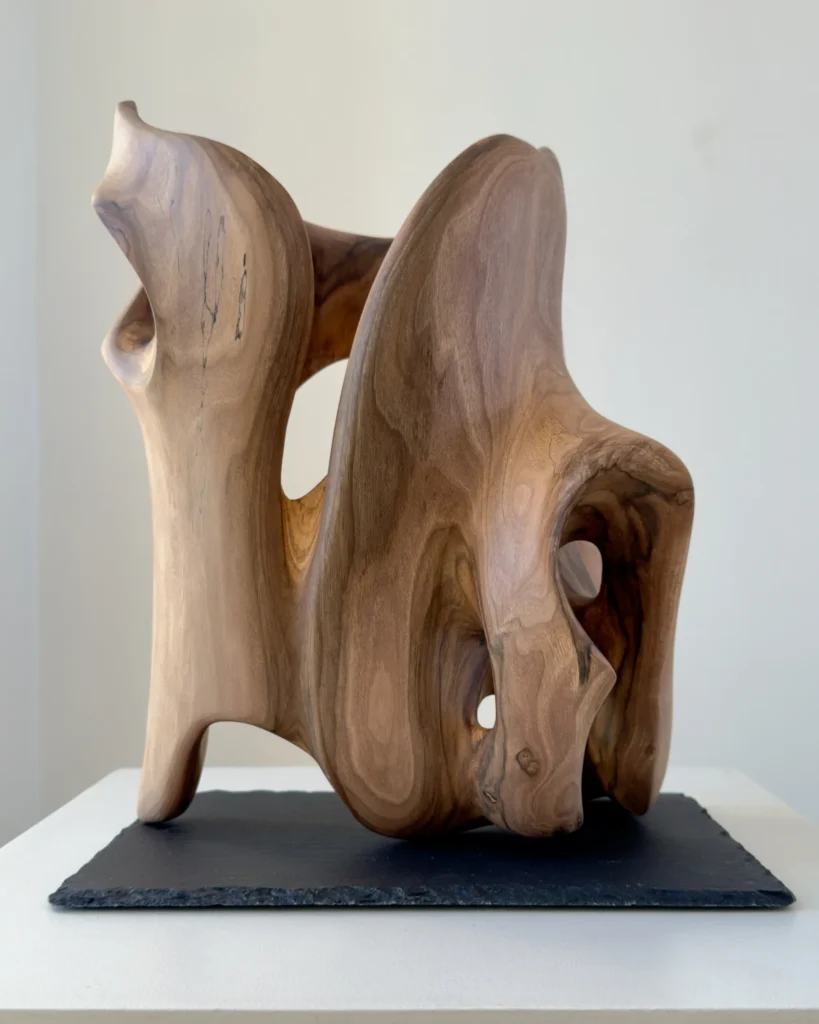
Is a crack in wood a flaw? Not always. To me, it is first of all a feature of the material that needs to be understood and considered. It may remain in the sculpture; it may be softened, or in some cases it may change the entire form. What I do with it becomes part of the decisions I make as the work develops.
Wood Has a History Before It Reaches the Studio
I work with solid wood, from a single piece. I do not begin with a perfectly uniform or predictable material. Every block already has its own structure, grain, knots, traces of branches, colour variations and internal stresses.
The tree grew for many years, responding to the conditions around it. Later, it was cut, seasoned and dried. During drying, the wood changes in volume, internal stresses are released, and cracks can appear. I see them as traces of a process that took place long before the wood arrived in my studio.
I work with well-seasoned, stable wood. An existing crack does not automatically mean that the material is unstable or that the finished sculpture will continue to crack. Wood remains a natural material and still responds to major changes in humidity and temperature, so finished pieces are best kept away from sudden environmental changes and direct sources of heat.
First I Look, Then I Decide
When I notice a crack, I do not make an immediate decision. I look at how it runs, how deeply it enters the wood, whether it crosses an important structural area, and how it relates to the whole block. I also pay attention to the grain, the direction of the fibres and the possibilities for further carving.
The first impression is not always right. Something that initially looks like an obstacle may become insignificant after a few more movements. In another piece, a small opening may continue deeper and suddenly change the way I need to work.
That is why I never treat a crack as an isolated problem. I always consider it in relation to the whole form.
A Crack That Remains
If it does not weaken the wood and works well with the sculpture, I leave it in place. After a while, I stop seeing it as a flaw. It becomes another line on the surface, much like the grain or the trace of a branch.
It may cross a quiet plane, follow the rhythm of the fibres, or appear exactly where the form changes direction. In some works, the crack is clearly visible. In others, it is only lightly present. If I feel that it strengthens the character of the sculpture, I have no reason to hide it.
I do not treat it as decoration. It only belongs there if it genuinely works with the form.
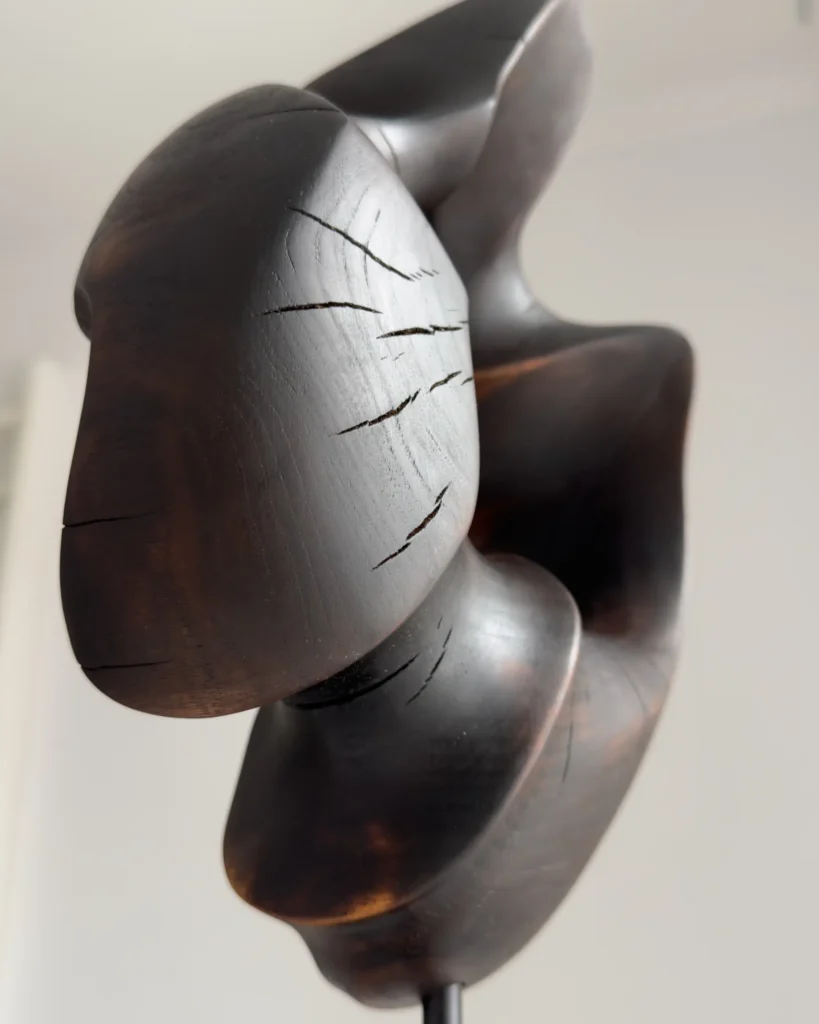
A Crack I Choose to Soften
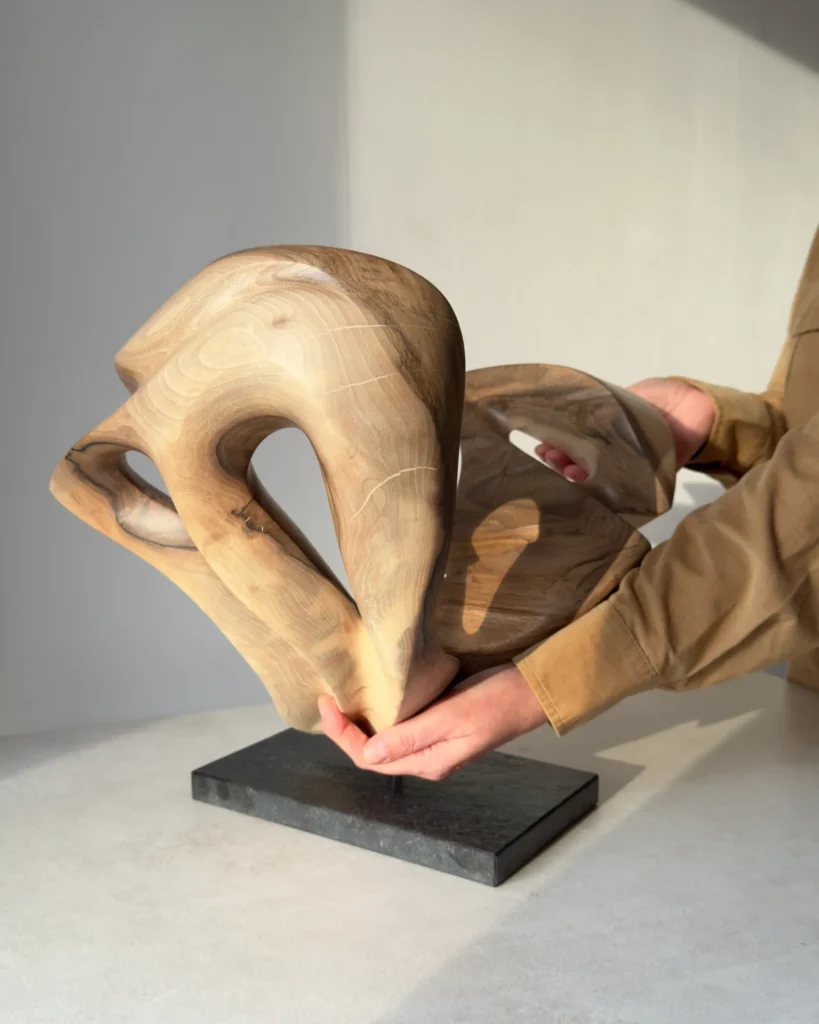
There are also situations where a crack causes no structural problem but begins to attract too much attention visually. I look at the sculpture and notice that the line is becoming more dominant than the form itself.
In that case, I soften it. It may be partially filled or reduced so that it remains present without taking over the whole piece.
What matters is the balance of the sculpture. If one trace starts to control the way the work is seen, I know it needs to be brought back into proportion.
A Crack That Changes the Entire Sculpture
The biggest changes happen when a crack runs deep into the material. I begin removing wood and follow it to see how far it goes. Sometimes it ends quickly, and I only need a small adjustment. In other cases, it reaches much deeper than I expected.
At that point, the issue is no longer the crack itself. The proportions begin to shift, along with the weight and direction of the whole block. A section that once seemed important may disappear, a larger opening may emerge, or a new line may begin to shape the form.
Because I do not work from a fixed design, I do not try to force the sculpture back towards the original idea. I look at what remains, how the balance has changed, and whether the new shape still gives me somewhere to go.
In the finished sculpture, there may be no visible trace of the original crack at all, and yet it may have had a major influence on the final form.
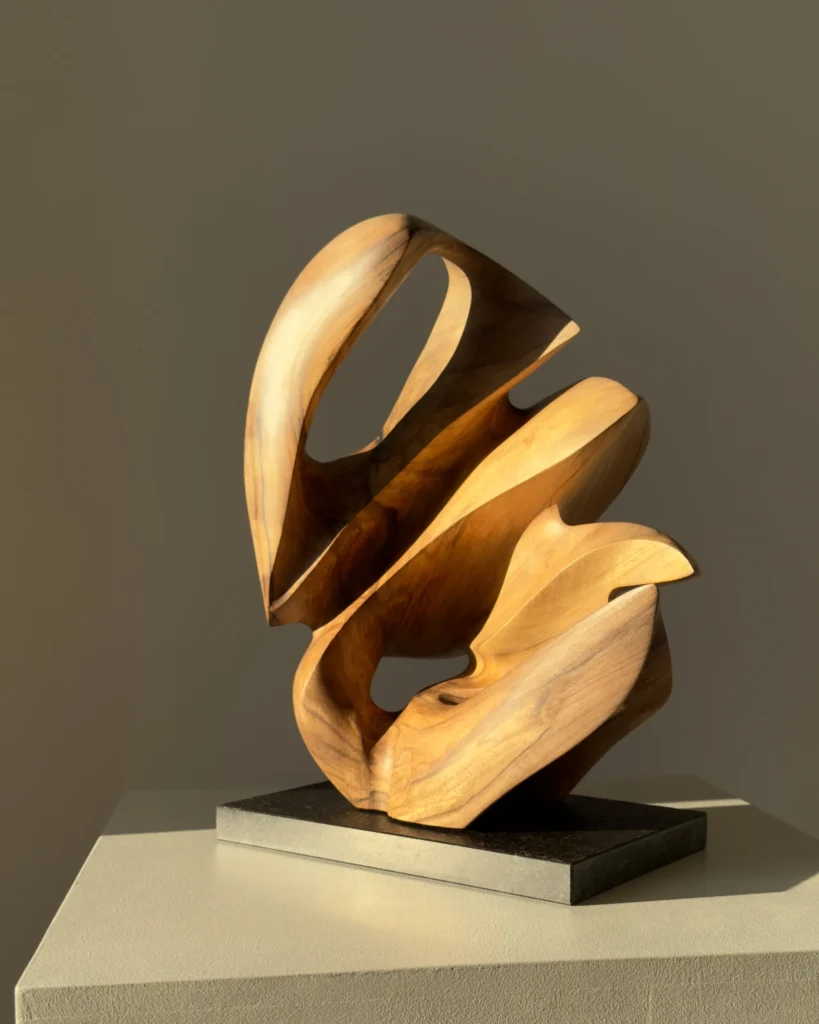
Not Every Piece of Wood Can Become a Sculpture
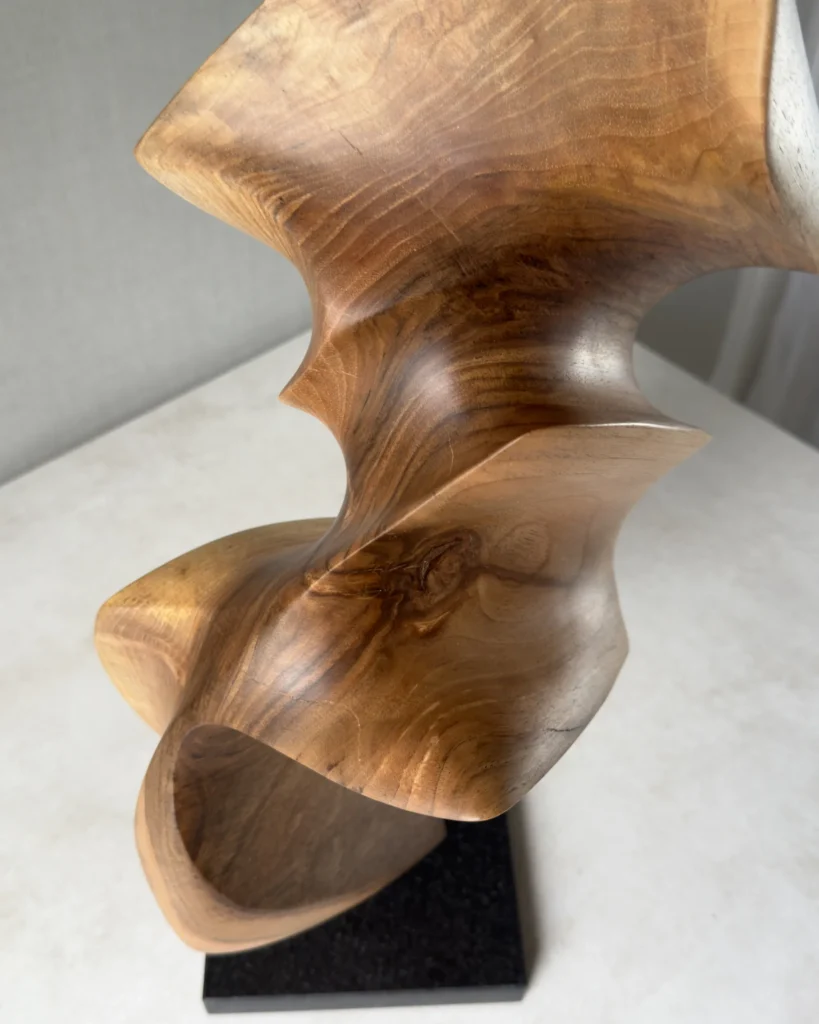
Accepting the natural character of wood also has limits. If a crack passes through an area that is too important structurally, or if the material is weakened so extensively that removing more wood no longer makes sense, I stop.
Not every piece has to become a sculpture. Recognising that moment is just as important to me as allowing a crack to remain when it truly belongs to the form.
What You See in the Finished Sculpture
Looking at a finished piece, it is not always possible to know everything that happened along the way. Some cracks remain visible, others are barely noticeable, and in some works no trace is left at all.
Each of these outcomes comes from a decision made during the process.
So if you see a crack in one of my sculptures, a faint trace of one, or a completely smooth surface, you can be sure it is not accidental. I first look at what that particular piece of wood allows me to do, and only then decide what should remain.