When I begin a sculpture, I do not have a finished form waiting to be transferred into wood.
There is no model to reproduce and no exact shape that the material needs to accept.
I begin with the wood itself. For me, a solid wood sculpture begins with the character of one particular piece of wood.
Its proportions. Its weight. The direction of the grain. The places where the tree grew evenly and the places where something changed. A knot, a darker area, a slight colour shift, an old tension hidden somewhere inside.
Some of these things are visible before I begin.
Others appear only after I cut deeper.
For me, this is where sculpture starts.
Not with a form and not with a piece of wood considered separately, but with the relationship that begins between them.
The form has to belong to the wood.
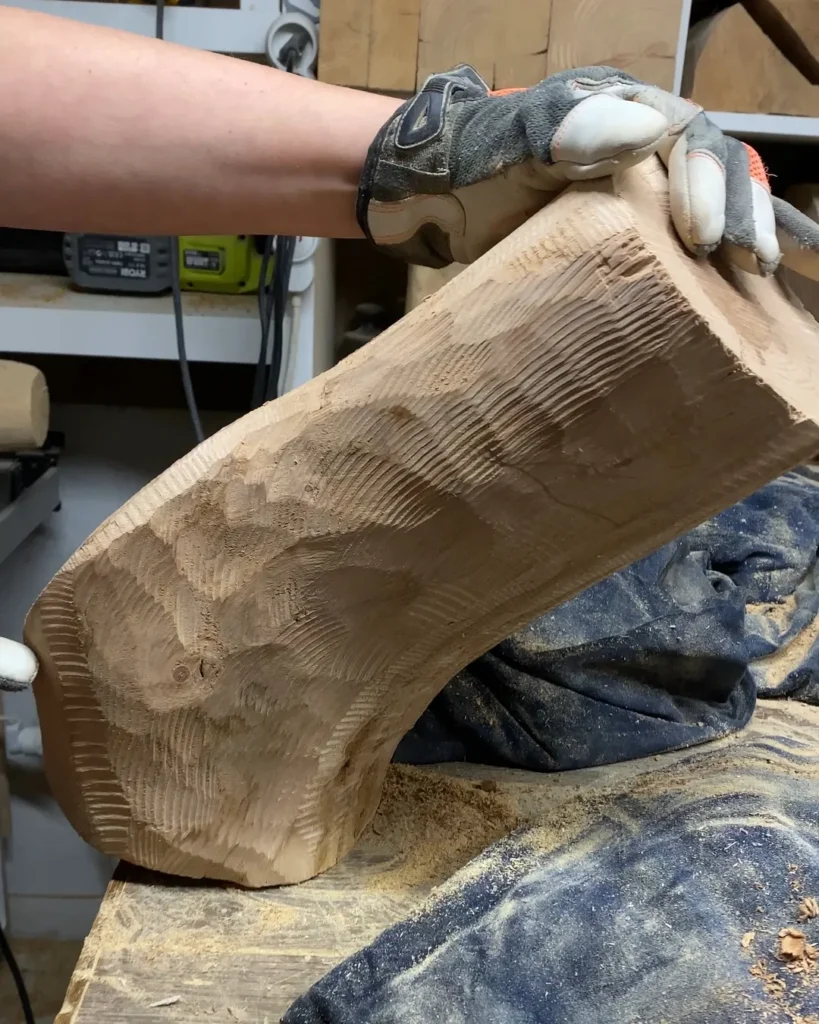
The material is not waiting for a form
There are many ways to work with wood.
A form can be designed first and then produced in the material. It can be modelled digitally, measured, repeated or translated from one medium into another. CNC carving makes this particularly clear: the form can already exist as data before the tool touches the wood.
There is nothing wrong with this way of working.
It is simply very different from mine.
In my process, the sculpture does not exist before the carving begins.
I may start with an impulse, a movement, an opening I want to explore, or simply curiosity about a particular piece of wood. But I do not know exactly where that beginning will lead.
The wood is not only the material in which an idea is realised.
It participates in what the idea becomes.
As I remove material, I begin to see things that were previously hidden. The grain changes direction. A darker section appears. One area feels stronger than I expected, another more fragile. A cut that seemed simple from the outside may open an entirely different possibility once I reach the interior.
And then I respond.
One decision creates the conditions for the next.
The sculpture slowly becomes something that neither the original piece of wood nor my intention could have produced alone.
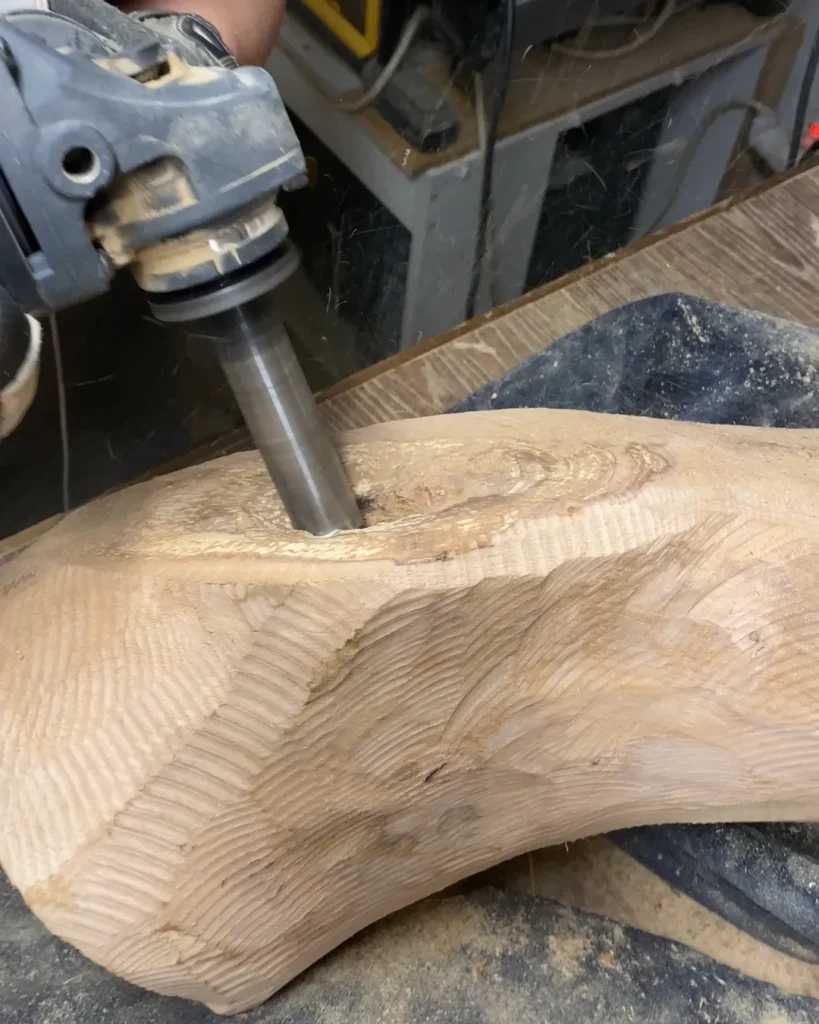
One piece of wood
This is also why I prefer to carve my sculptures from one continuous piece of solid wood.
It is not simply a technical preference.
The continuity of the material matters to me.
When I begin with one piece, everything that later appears in the sculpture has belonged to that same piece from the beginning.
The grain that moves across one surface continues somewhere else. A curve can turn into an opening, disappear into a recess and return on another plane, while still remaining part of the same physical structure.
Nothing has been added to complete the form.
I can only work with what is already there.
That creates limitations.
But those limitations are important.
I cannot make one part wider because the composition suddenly asks for more material. I cannot change the direction of the grain by introducing another piece. If I remove too much, I cannot return to the previous mass.
The original block sets the boundaries.
Inside those boundaries, I look for movement.
This makes every decision irreversible in a very physical way. Each cut reduces the number of possibilities, but at the same time reveals new ones.
I find this tension essential.
The material does not give me unlimited freedom.
It gives me something more interesting: a set of conditions to respond to.
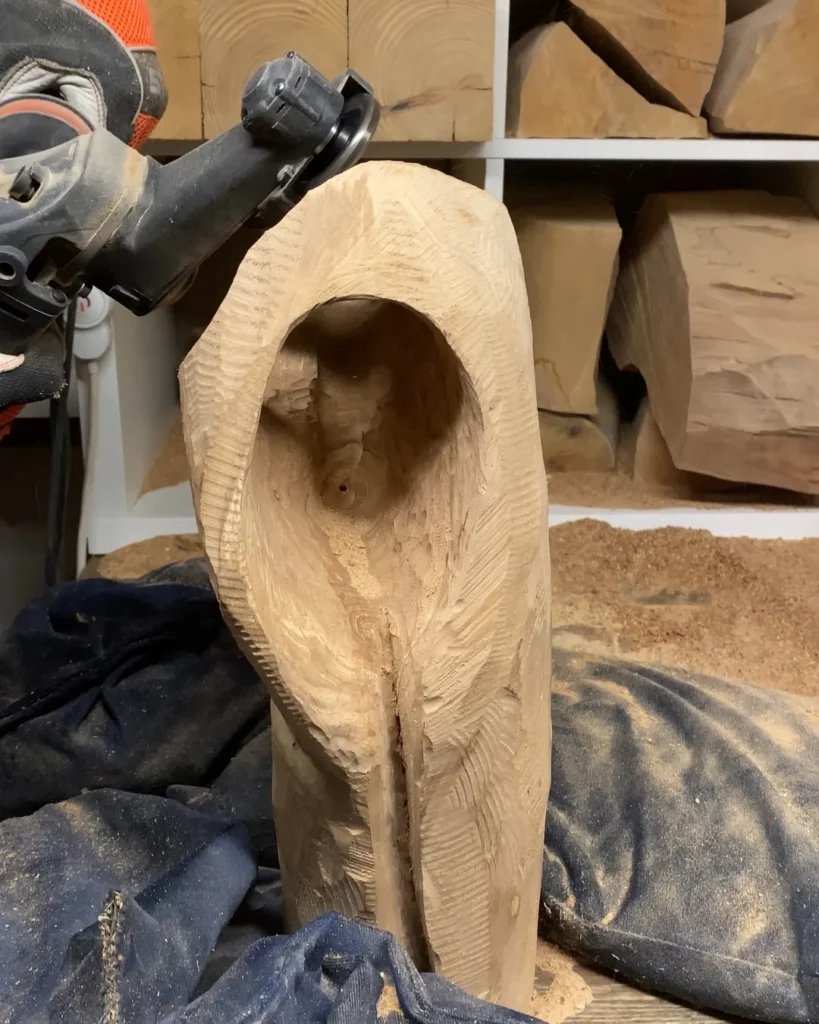
When the wood changes the sculpture
While working on Unfolding Within, this relationship became especially visible to me. I began with a solid piece of black locust and a simple urge to look inside it. I wanted to open the mass. Not according to a drawing, but gradually, by cutting deeper and seeing what each new opening made possible.
At first, the piece was still heavy and contained. Later, parts of the mass began to separate visually. Open spaces appeared. Surfaces started to turn away from one another and then return. At a certain stage, the sculpture almost seemed to consist of several independent elements.
But it did not.
Everything remained connected within the original piece of wood. That continuity became part of the work itself.
Some sections could become thin. Others had to remain heavier. Certain connections needed enough strength to support the whole form. The grain sometimes followed the movement I was creating and sometimes resisted it.
The sculpture developed through those negotiations. I could not simply decide what I wanted the next part to become.
I had to ask what was possible here. In this wood. At this point.
After everything that had already been removed. This is one of the reasons I cannot separate form from material. The sculpture is neither imposed on the wood nor dictated by it. It emerges somewhere between the two.
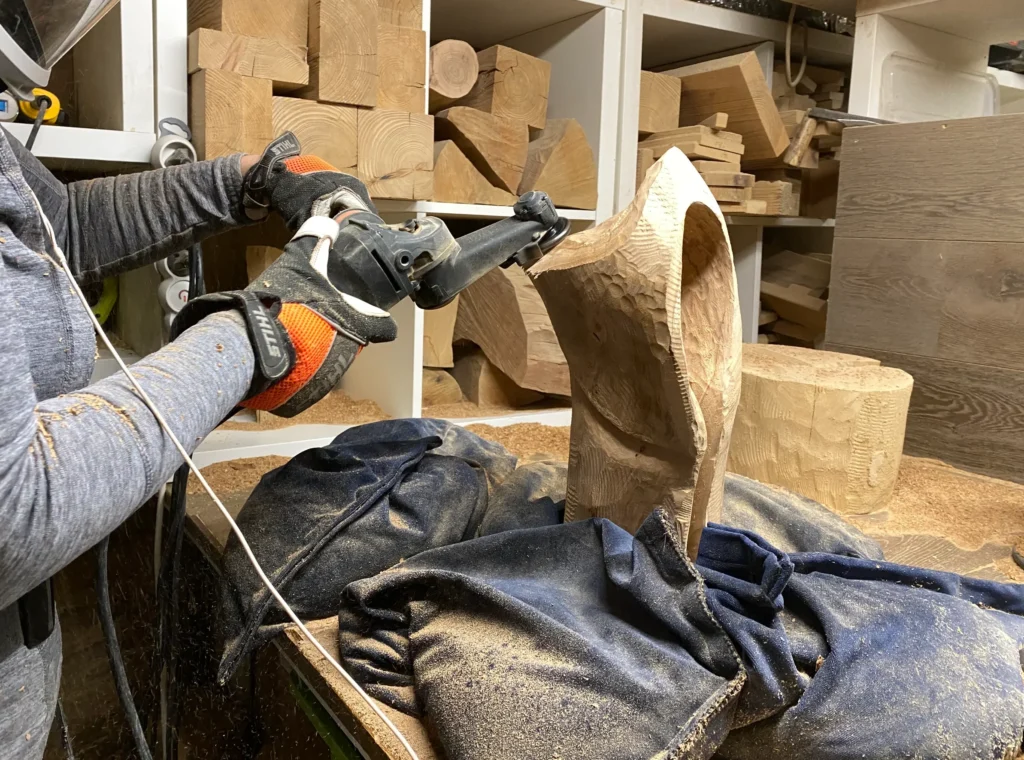
Why the same sculpture cannot happen twice
People often use the words one of a kind to describe handmade objects.
In my work, I think about this a little differently.
Uniqueness is not something I add at the end by deciding not to make another copy. It begins much earlier.
There are no two identical pieces of wood. Even within the same species, each tree grows under different conditions. The grain changes. Colour changes. Density changes. Branches leave traces. Stress leaves traces. Damage and recovery leave traces.
Some of this history can be read immediately. Some of it remains invisible until the wood is opened.
If the material takes part in shaping the sculpture, then a different piece of wood must lead to different decisions. And if the decisions are different, the form cannot truly be the same.
I could try to reproduce the dimensions of an earlier sculpture. I could measure its openings and curves. But the second piece of wood would already make it another work.
Its grain would move differently through the form. Its internal structure would respond differently to cutting. Something that was possible in the first piece might feel completely wrong in the second.
More importantly, I would no longer be discovering the form. I would be trying to return to something that had already happened.
That is why I do not copy my own sculptures.
Each form exists once because the encounter that created it exists once. One piece of wood. One sequence of decisions. One moment in time.
Then it is gone.
What finishing reveals
There is another moment in the process when this relationship becomes especially visible.
Finishing.
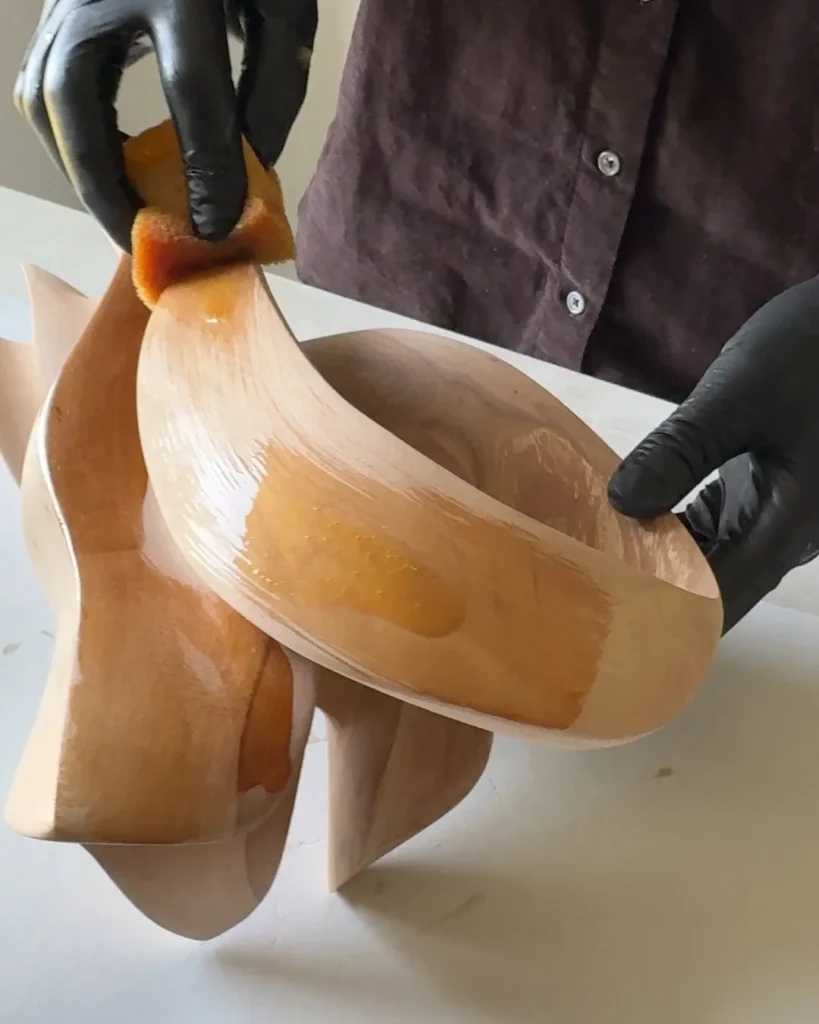
After the rough carving, after the long sanding and refinement, the surface can still appear pale and quiet.
Then the finish begins to reveal what was already there. With Unfolding Within, I chose to preserve the natural colour of the black locust rather than colour the sculpture. When the wax touched the surface, the differences within the wood became much more visible. Warm amber tones appeared. Deeper areas became darker. The grain gained contrast. Nothing had been painted onto the sculpture to create these changes. They were already inside the material. Carving had exposed them. Finishing simply allowed them to become visible.
I like this moment because it reminds me that even after many hours of shaping, there are still things in the wood that I did not create. My work changes the way they can be seen. But they belong to the tree.
A new part of the same story
Before it came into my workshop, every piece of wood had another existence. It grew somewhere. It carried weight. It moved with changes in temperature and moisture. It developed grain, colour and internal tensions over years that had nothing to do with sculpture.
By the time I begin carving, that history has already happened.
I do not think of sculpture as erasing it. I would rather allow something new to begin from it.
Perhaps this is why working from one continuous piece matters so much to me.
There is still a physical connection between what the wood was and what the sculpture becomes.
The shape may change completely. Large parts of the original mass may disappear.
Openings may replace solidity. Heavy areas may become narrow edges. A block that once seemed closed may eventually allow light to pass through it.
But it is still the same piece.
The transformation does not require the material to stop being itself. For me, that is where the character of a sculpture comes from. Not from form alone. Not from wood alone. From what happens when the two are allowed to develop together.
And perhaps that is also why I never know exactly what I am making when I begin.
If I knew the finished form in advance, the wood would have much less to say.
I prefer not to know. I prefer to begin with one piece, make the first movement and see what becomes possible from there. Each time, the answer is different. Because each piece of wood has only one history, and each form can exist only once.
You can see the finished sculpture, Unfolding Within, in the gallery.
