While sculpting, I make decisions all the time.
Some are small — about a single curve, an edge, or a place where I might remove a little more wood. Others affect the entire sculpture.
Over time, however, I have learned that making a decision does not mean I have to remain loyal to it.
A decision is a response to what I see at a particular moment.
And while I am sculpting, what I see is constantly changing.
A few more cuts can alter the proportions. Removing one section of wood can open a space that did not exist before. A form that seemed important in the morning may feel completely different by evening.
So an earlier decision does not become a mistake simply because I later change it.
Sometimes it was simply the right decision for an earlier stage of the work.
When I first picked up the piece of walnut that would eventually become Becoming, I imagined it as a horizontal form.
But I wasn’t certain, and I didn’t want to decide yet.
I began carving and left the question of its final orientation open.
The form developed through each stage of the work. I turned the wood, looked at it from different sides, and gradually removed what I felt it no longer needed.
Eventually, after carving and sanding, I applied the wax.
It seemed finished.
That was when I decided to place it vertically.
I drilled the hole needed to mount the sculpture on its granite base and stood it upright.
From one side, it worked.
For a while, that was enough to make me believe the decision was right.
But a sculpture is not seen from only one side.
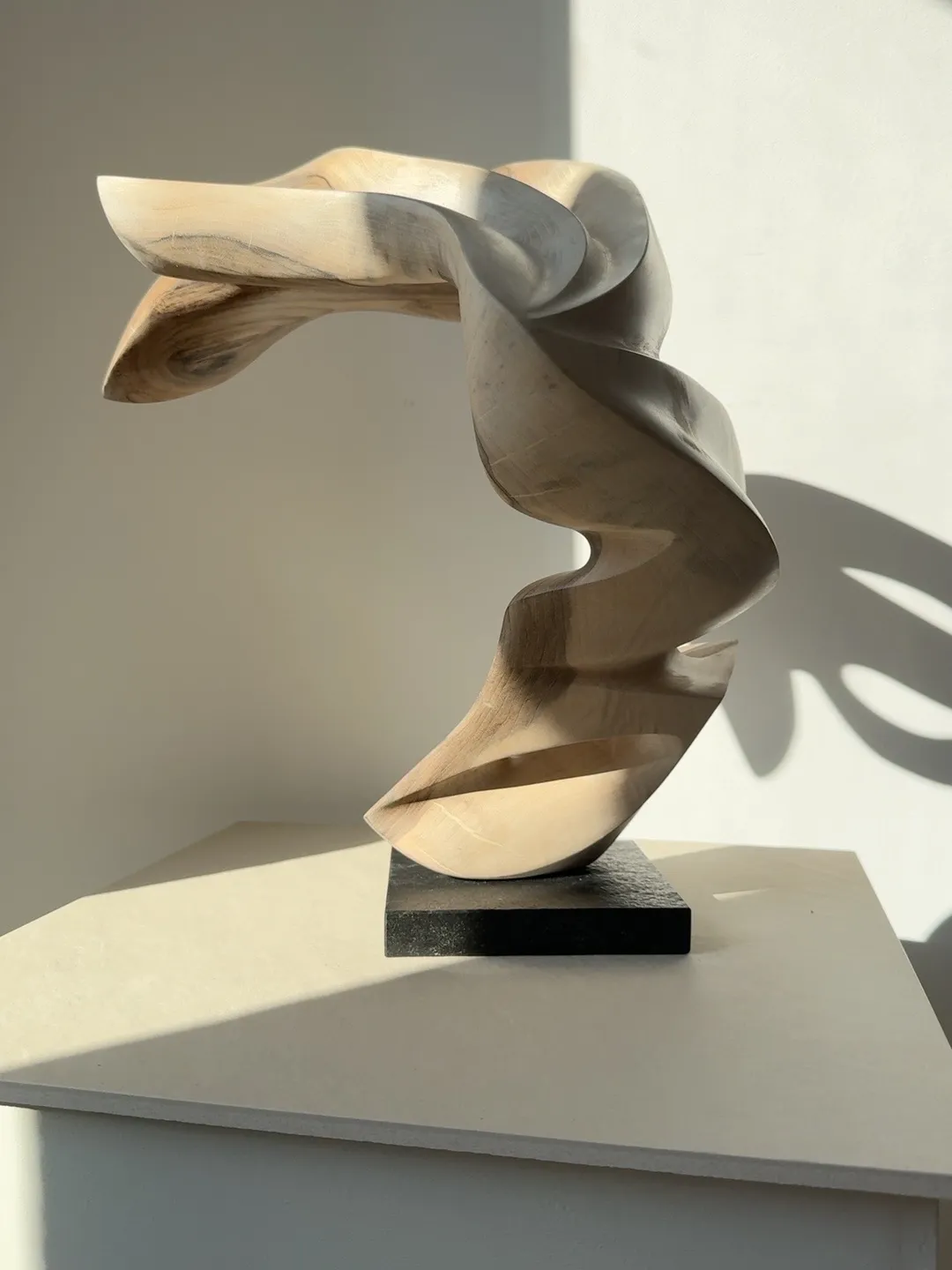
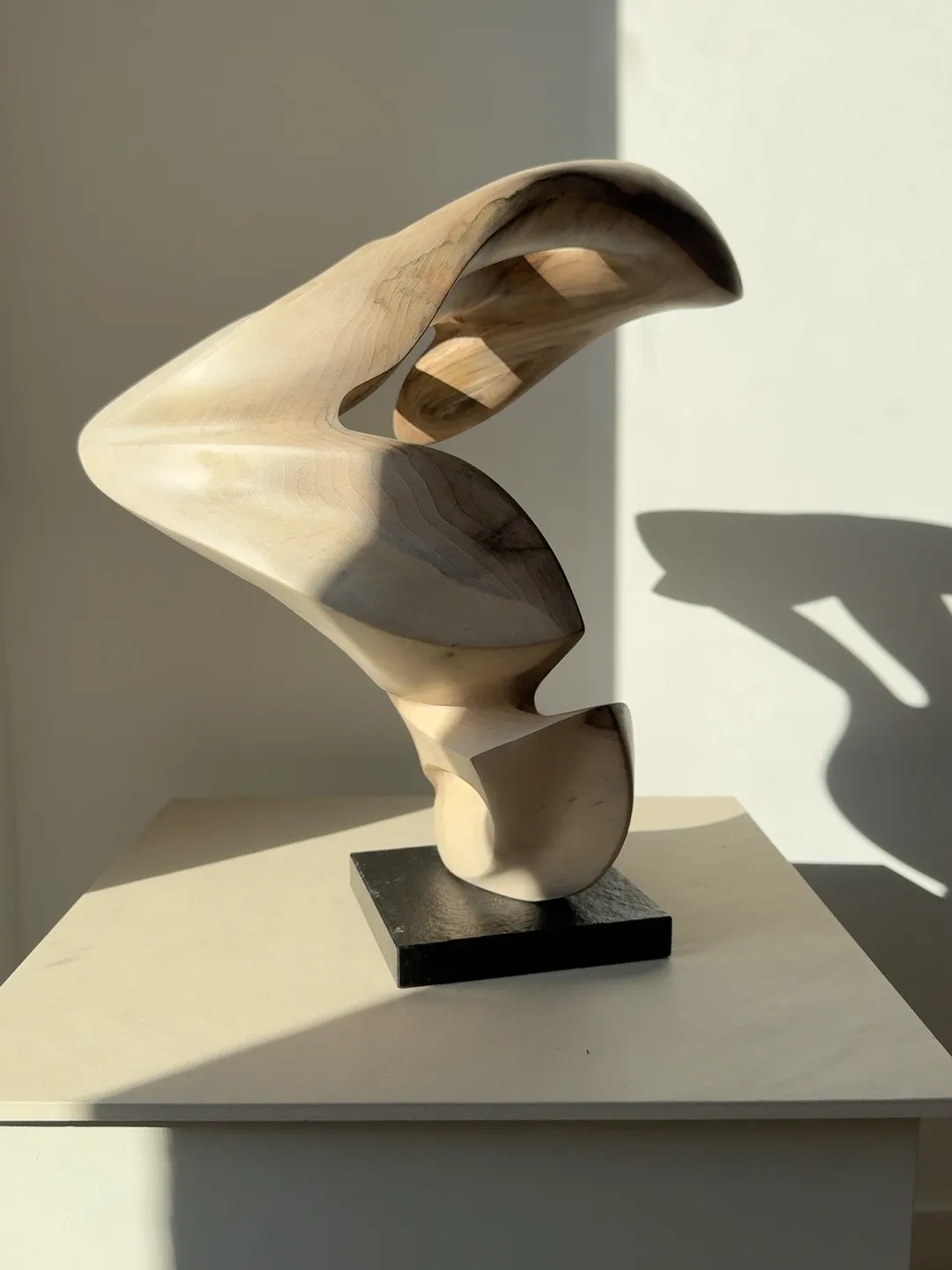
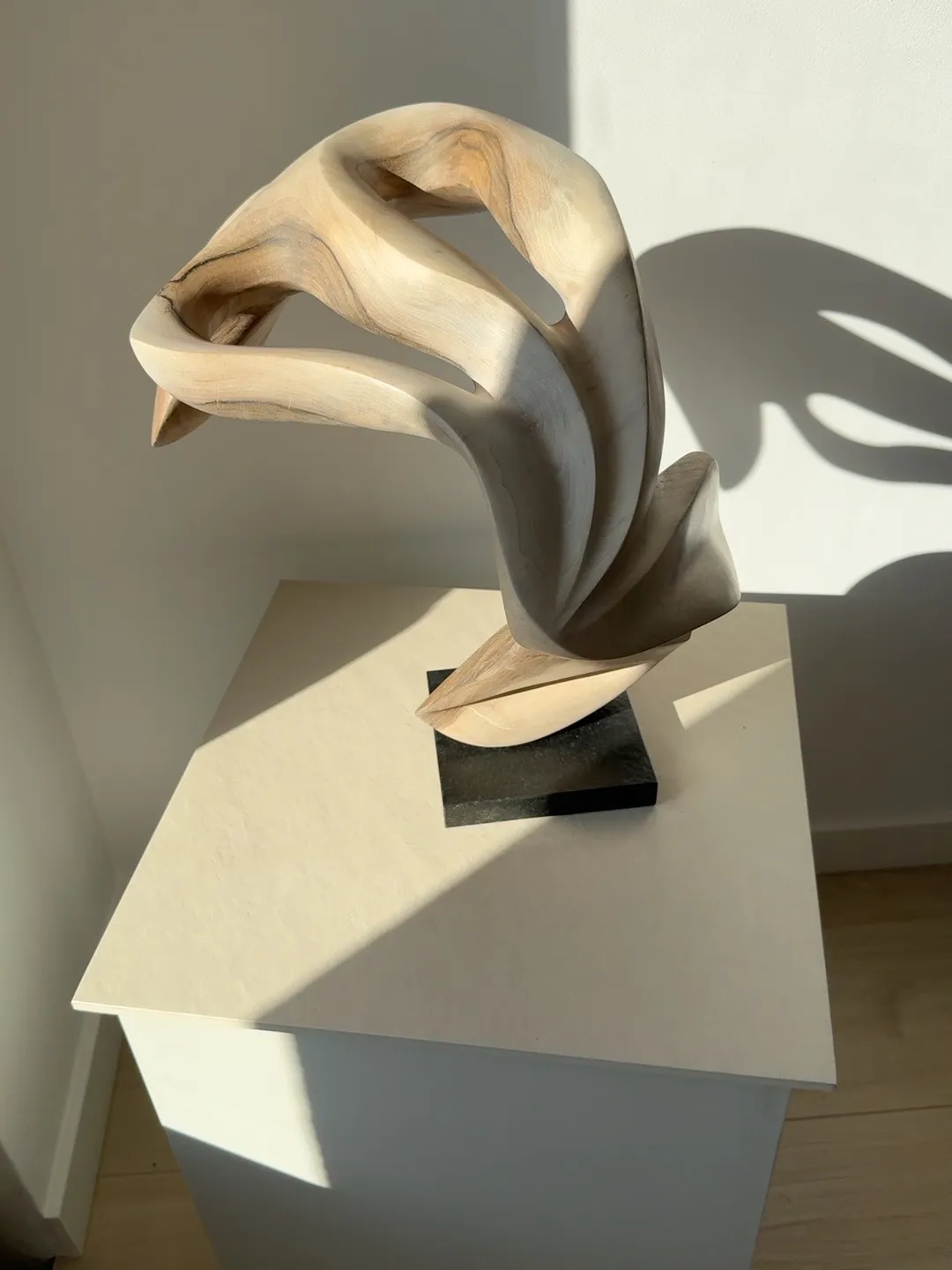
I would use photographs that show why the vertical orientation initially worked, but also reveal how much the form changes when viewed from another side.
During the photo session, I began turning it and looking at it as someone might while walking around it.
From one perspective, the form was clear and held the tension I was looking for.
From another, it began to lose that clarity.
Something wasn’t right.
I could have left it as it was.
It had already been carved, sanded, and waxed. The mounting hole had been drilled. The granite base was ready. Many decisions had already been made and acted upon.
But none of them was a promise.
I placed the sculpture horizontally.
In a way, I had returned to the first thought I had when I held that piece of wood in my hands.
But I had not returned to the beginning.
The sculpture was already different.
In its new orientation, the section that had previously formed an arm connecting the sculpture to the base no longer worked in the same way.
For the horizontal position to make sense, I had to change the form again.
So I returned to carving something I had already considered finished.
As I removed more wood, an open space appeared between parts of the sculpture. New cuts emerged. The relationship between the two developing forms became clearer.
One seemed to have moved further.
The other had stopped earlier.
I did not try to make them equal.
They did not need to be.
Today, those differences and open spaces seem as though they have always belonged to Becoming.
But they haven’t.
They appeared because, at one point, I allowed myself to question a decision I had already made.
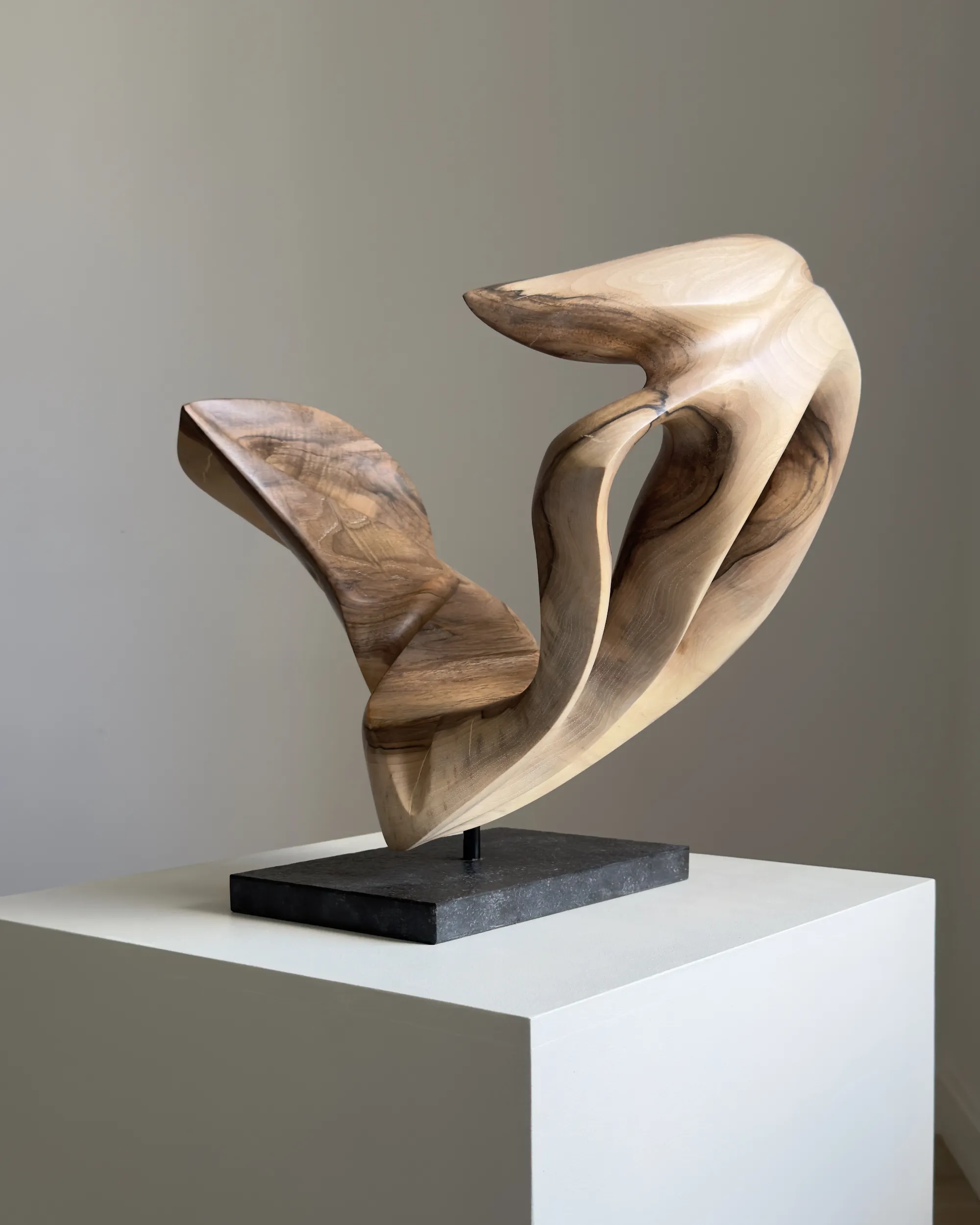
I would choose a view where both developing forms and the open space between them are clearly visible.
If I had followed my first idea of a horizontal orientation from the beginning, I don’t know whether the sculpture would look the way it does today.
If I had remained loyal to my later decision to place it vertically, I know it would look different.
The final form emerged somewhere between those decisions.
Not because one was right and the other was wrong.
Each allowed me to see something I could not see before.
I think this is why leaving myself the possibility of changing direction matters so much to me.
I don’t want a decision I made a few hours or a few days earlier to limit what I am able to see now.
Sometimes I need to make a decision simply to move forward.
Sometimes I need to work with it for a while to understand its consequences.
And sometimes I need to let it go.
When I look at Becoming today, it is difficult to separate its final form from all the decisions I changed along the way.
Each one was necessary long enough to lead me to the next.
That is why I don’t treat a decision as a promise.
I make it in response to what I see now.
And then I look again.
This reflection emerged while working on Becoming.
