A sculpture begins long before the first cut. Before I pick up a tool, I spend time simply looking.
Some imagine that it starts with an idea. Others think it begins with the first cut. For me, it begins even earlier.
It begins the moment I start looking.
Not for a finished sculpture, but for what the wood is already quietly holding.
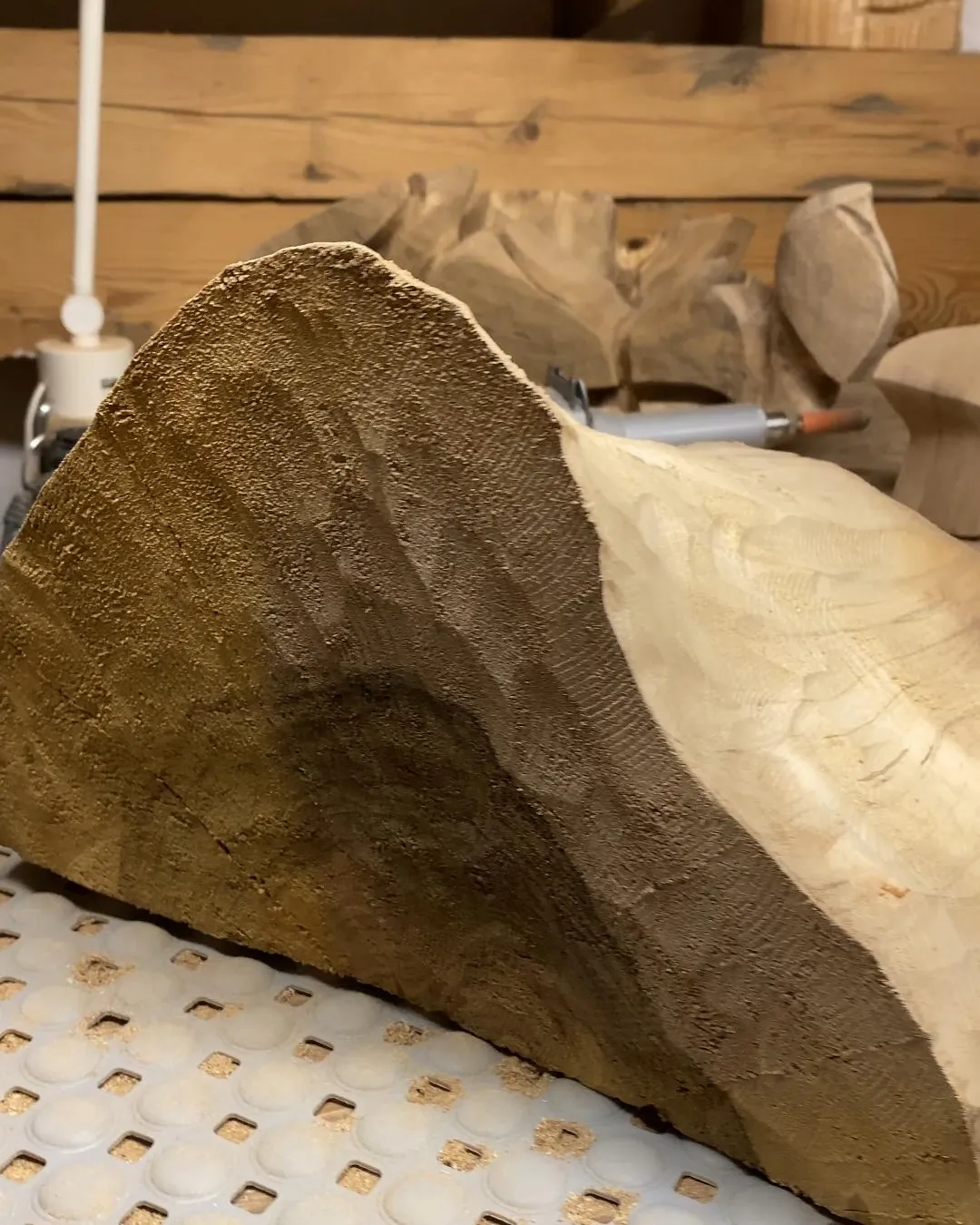
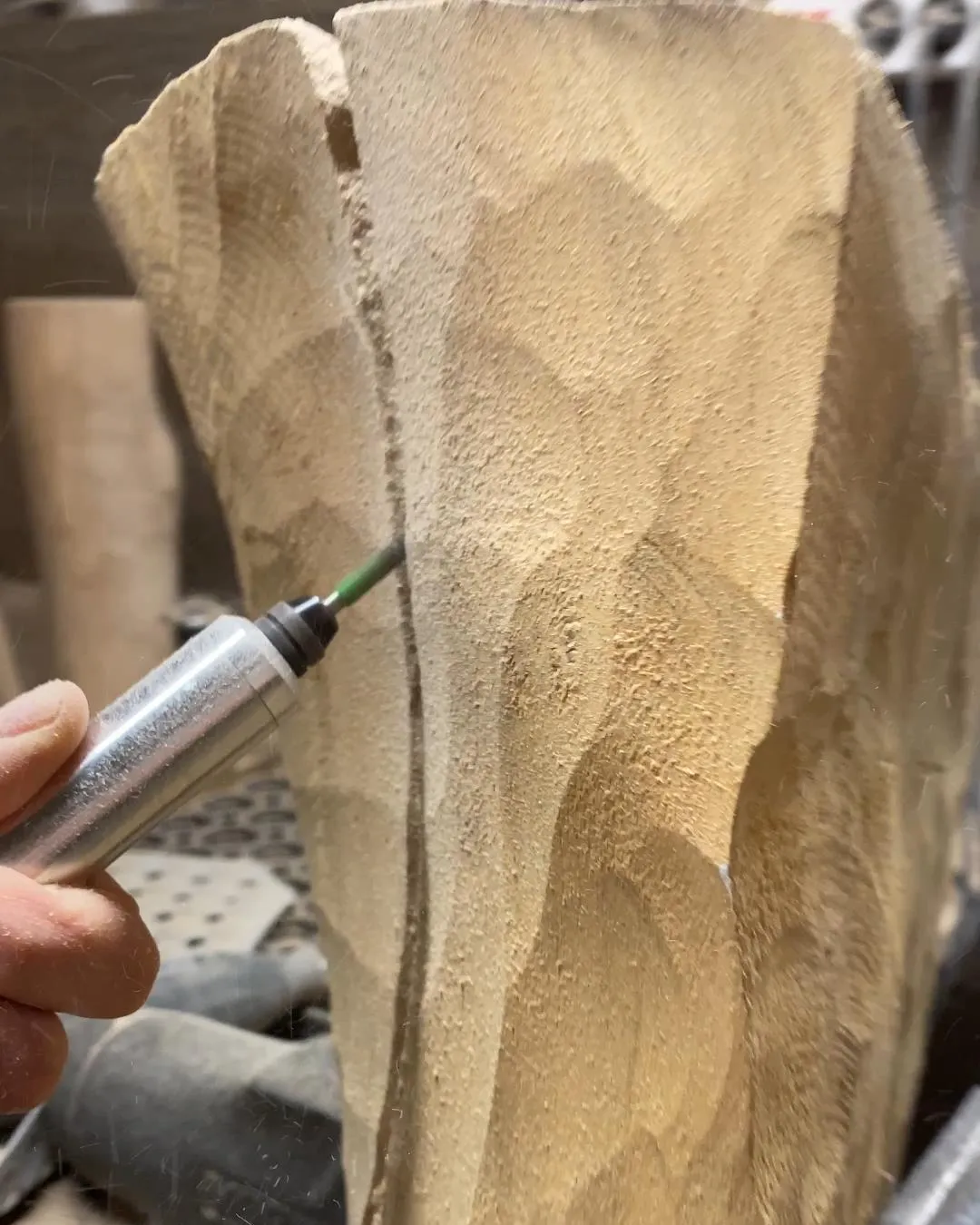
Before I make the first cut, I spend time simply observing.
The proportions, the direction of the grain, the weight, the balance.
The places where heartwood slowly gives way to sapwood. I don’t know what the sculpture will become.
I only know where the conversation begins. I don’t search for wood that fits an idea. I begin with the wood…
…and discover what it may become.
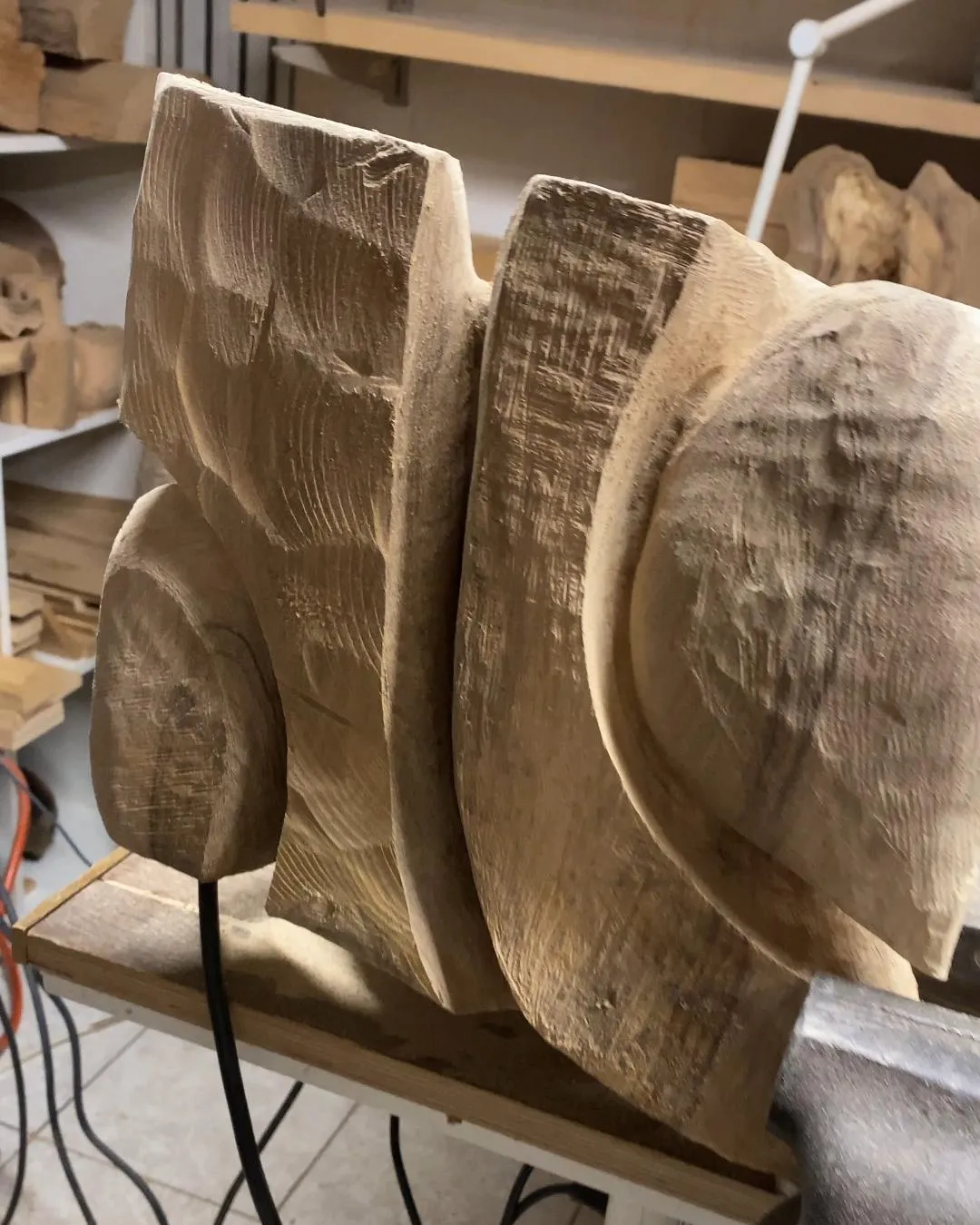
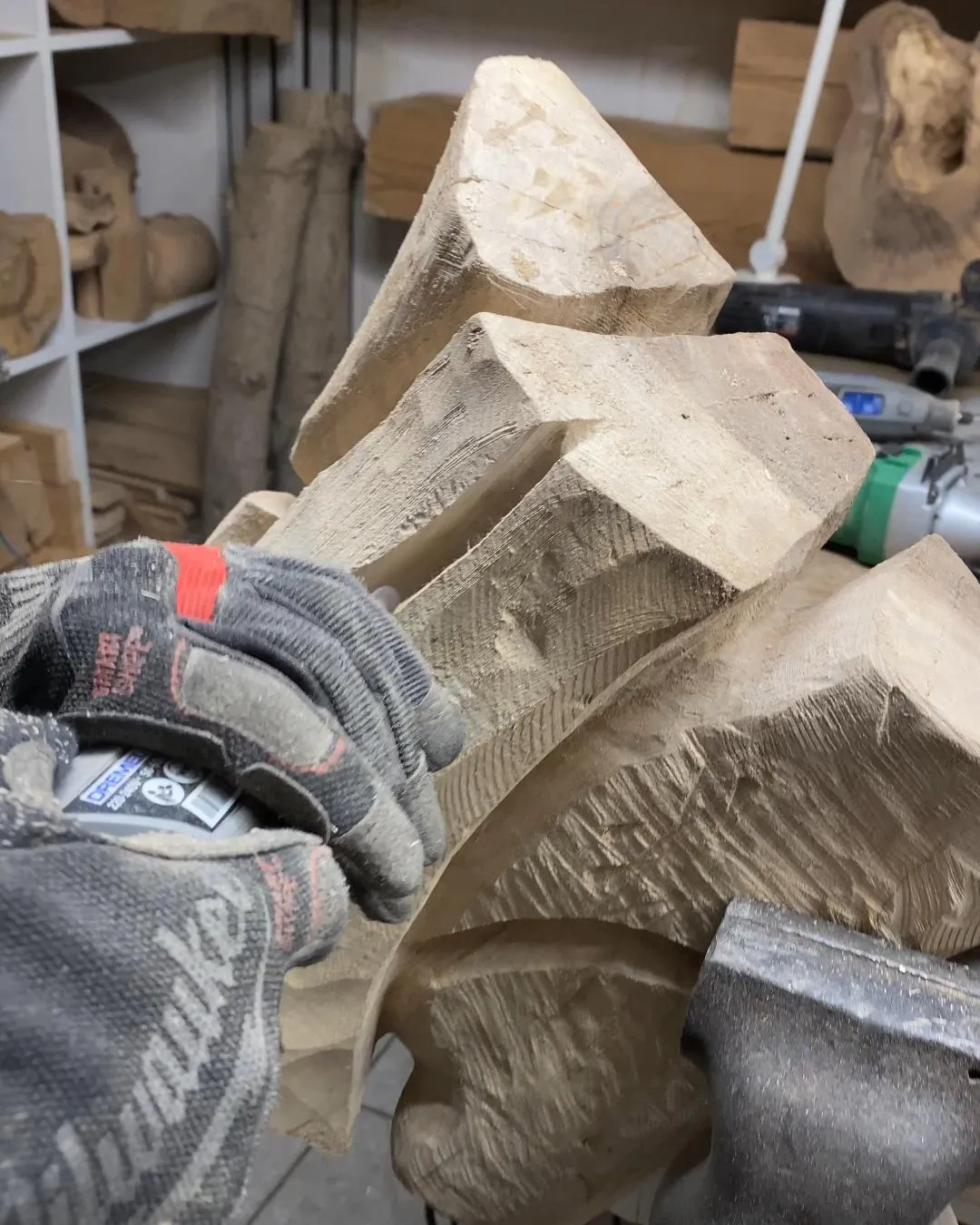
The first cuts do not reveal a sculpture.
They reveal possibilities.
Every surface changes the next decision. Every curve suggests another.
Sometimes a direction disappears completely. Sometimes an unexpected one appears.
People often see the tools.
I see something else. I see the wood slowly beginning to answer.
Not because I force it. Because every cut allows me to understand it a little better.
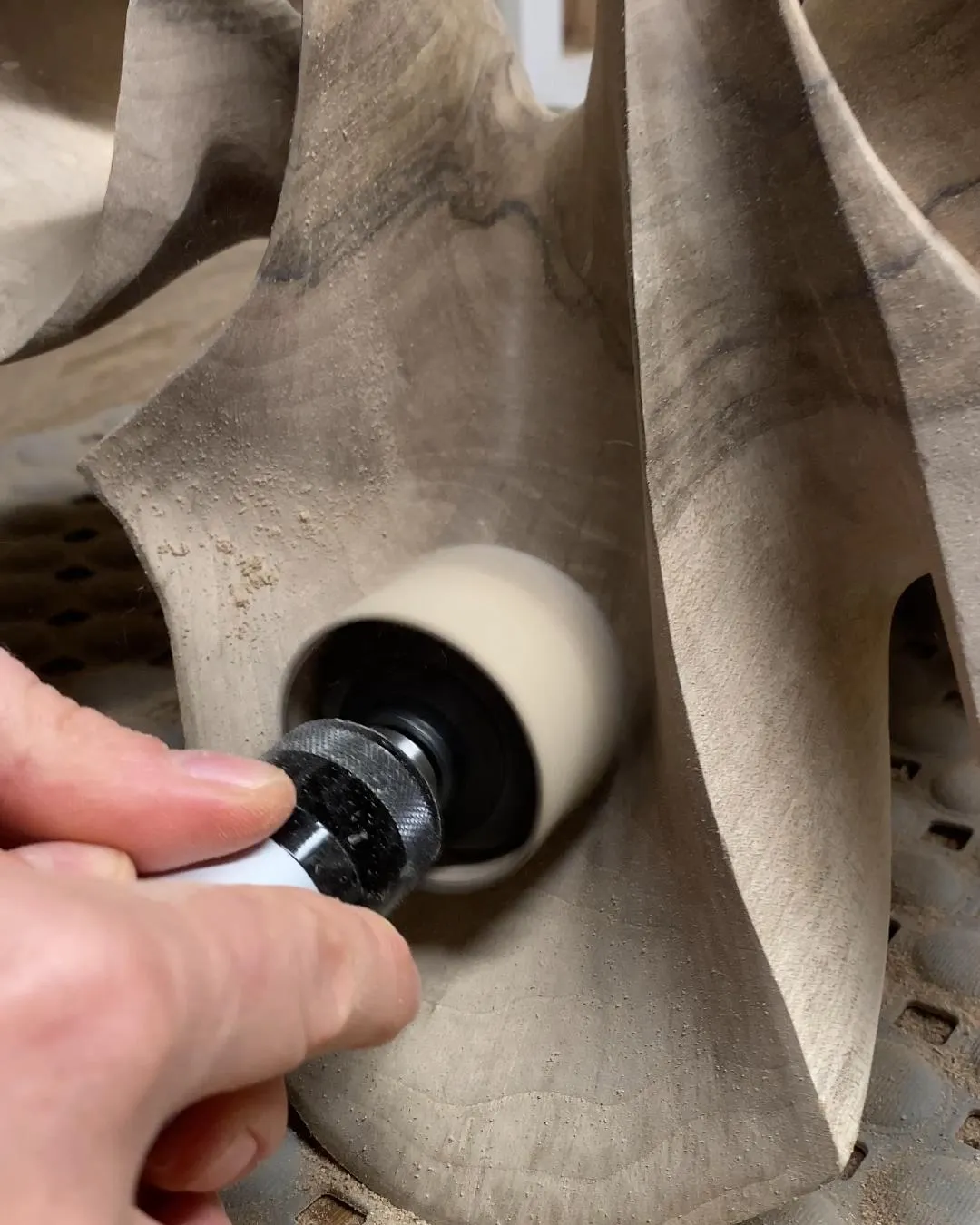
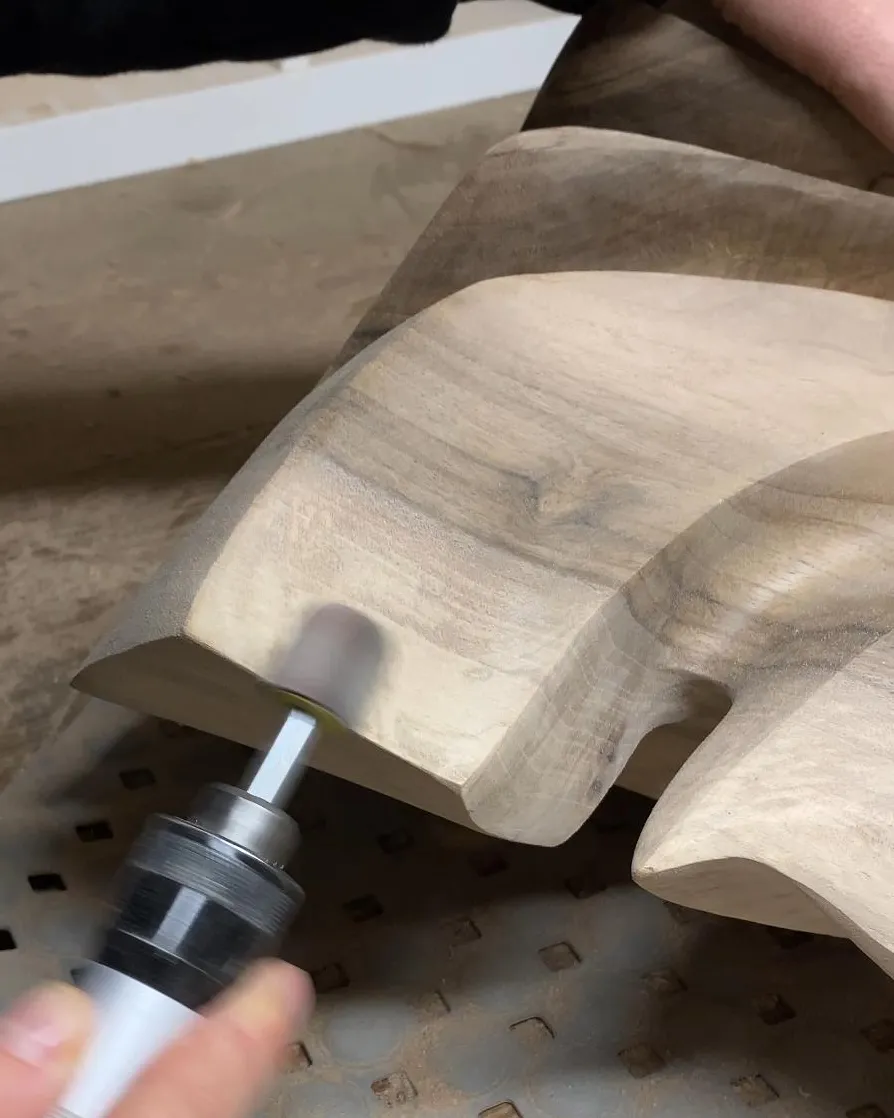
Carving gives the sculpture its form. Sanding gives the wood its voice again. The marks left by the tools slowly disappear.
The grain becomes clearer. The transitions become softer. The light begins to travel differently across the surface.
It is no longer about removing wood. It is about removing everything that hides it.
This is often the quietest part of the entire process. And perhaps the most revealing.
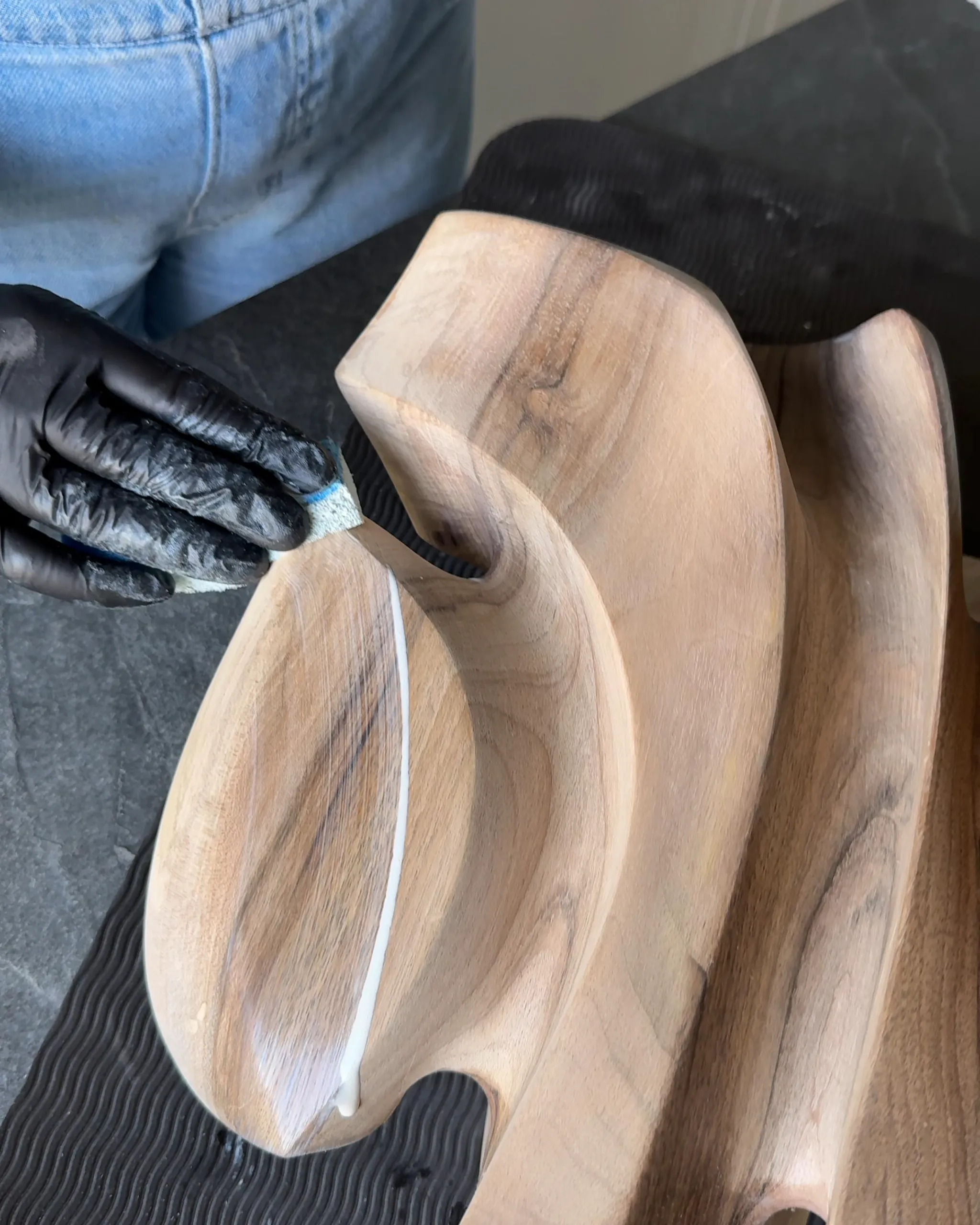
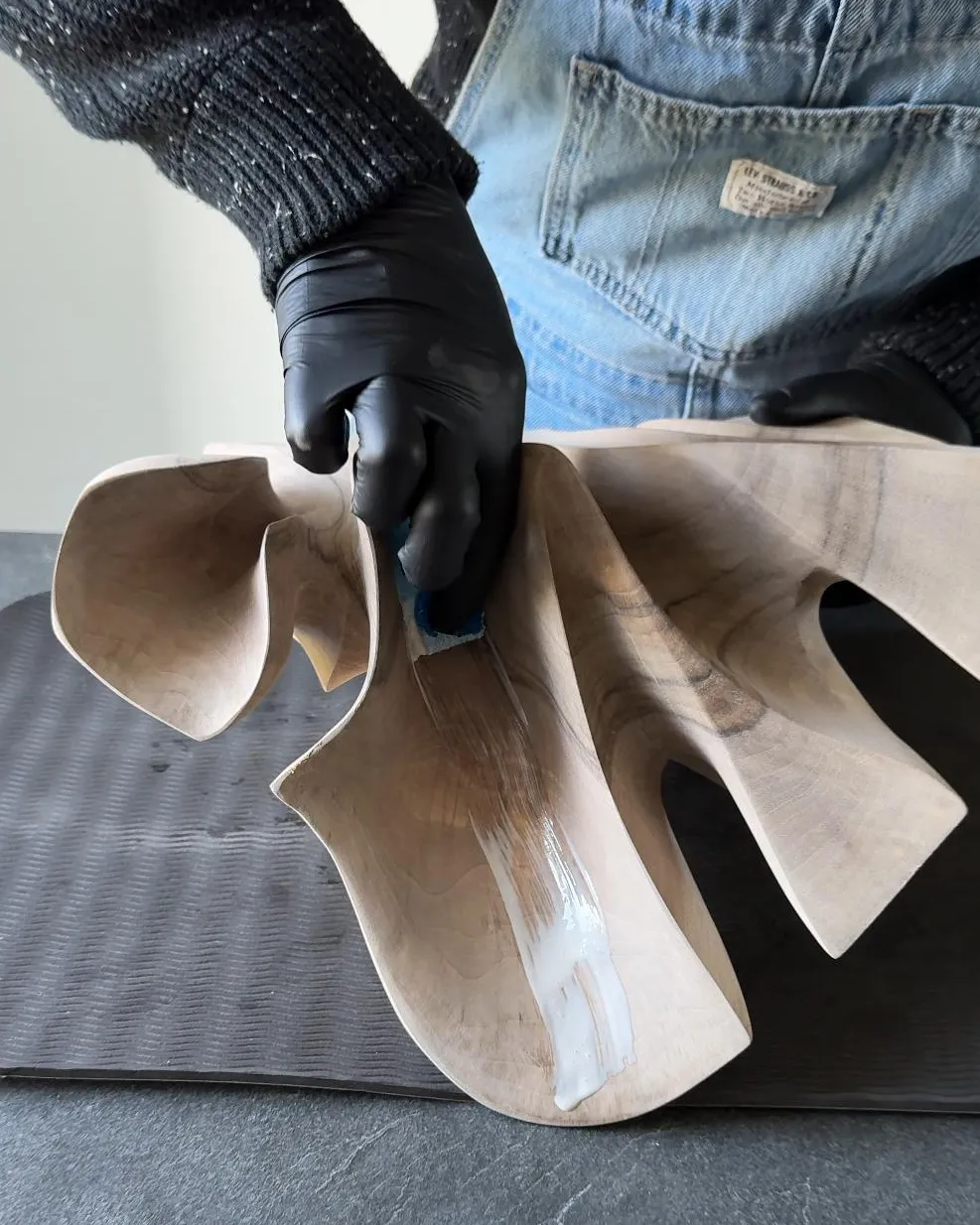
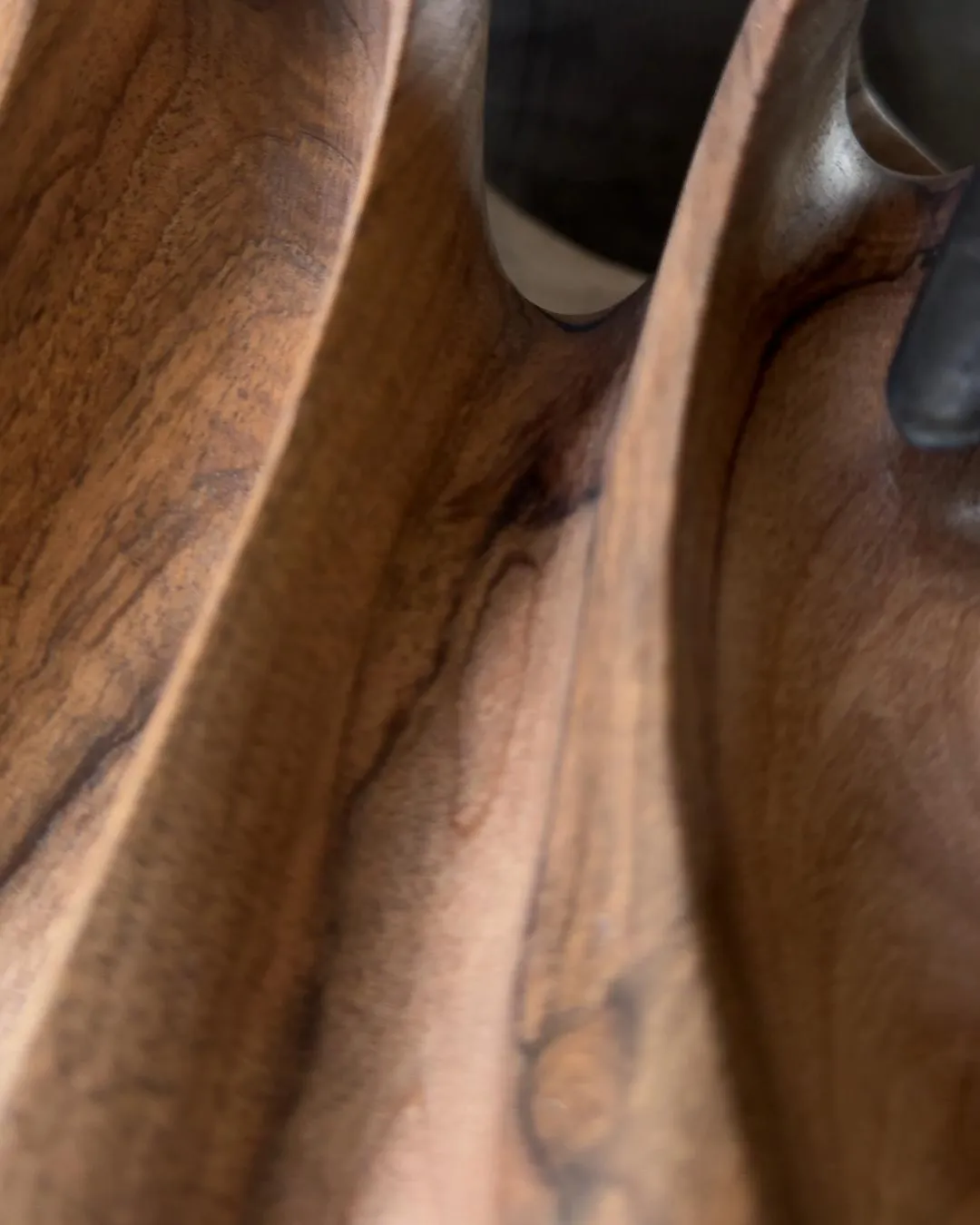
Then comes the first coat of wax.
People sometimes think this is the moment when the wood becomes beautiful. I see it differently.
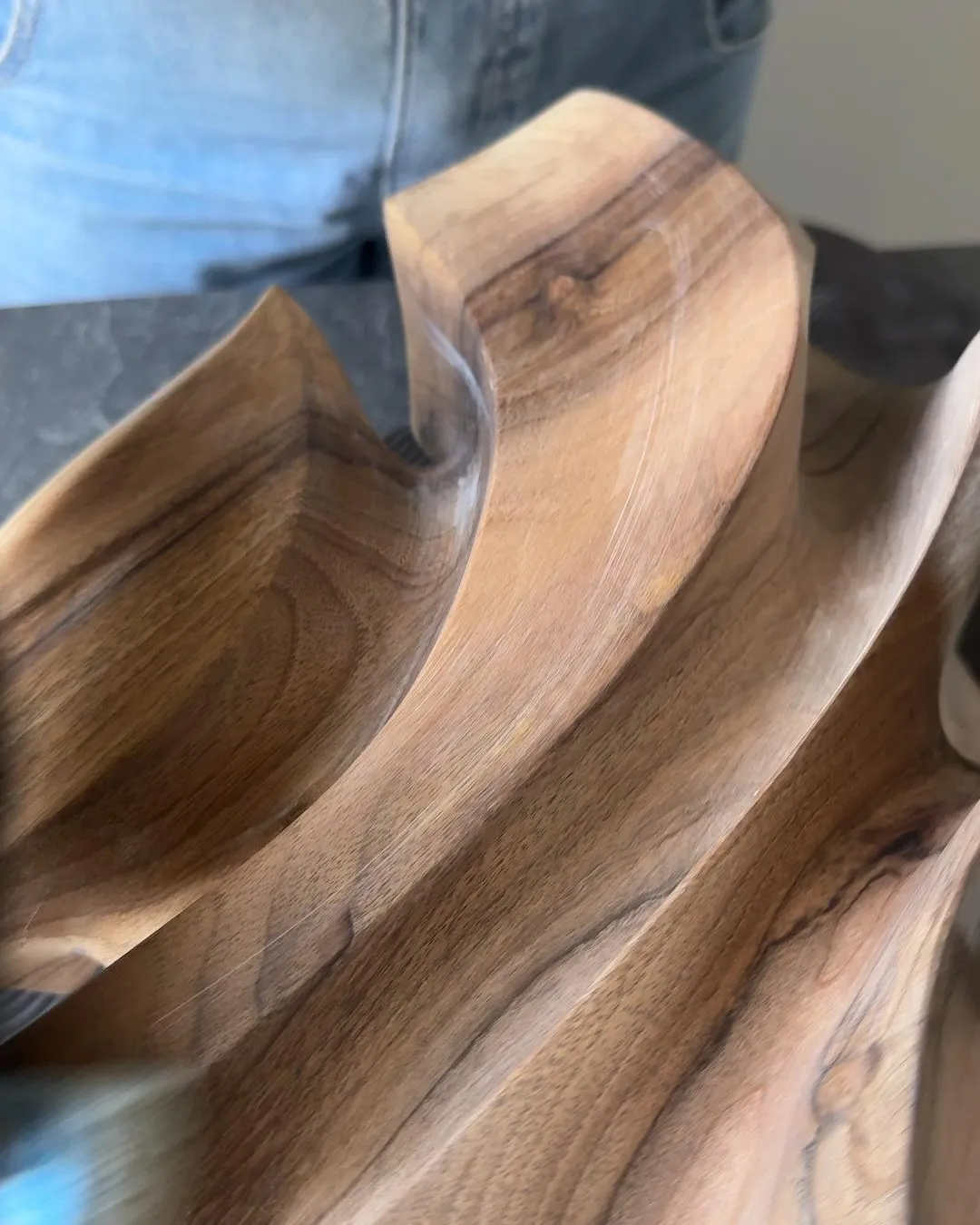
The wax does not create anything. It simply uncovers what has always been there. The grain becomes deeper.
The contrast becomes richer. The years recorded inside the tree quietly return to the surface.
Folded Presence grew from these quiet observations.
Continue the story:
